
9For this reason also, since the day we heard of it, we have not ceased to pray for you and to ask that you may be filled with the knowledge of His will in all spiritual wisdom and understanding, 10so that you will walk in a manner worthy of the Lord, to please Him in all respects, bearing fruit in every good work and increasing in the knowledge of God; 11strengthened with all power, according to His glorious might, for the attaining of all steadfastness and patience; joyously 12giving thanks to the Father, who has qualified us to share in the inheritance of the saints in Light.
13For He rescued us from the domain of darkness, and transferred us to the kingdom of His beloved Son, 14in whom we have redemption, the forgiveness of sins.
Interesting Words
pray
(προσεύχομαι – Greek) – proseuchomai ► Verb – Present Participle Middle or Passive (present tense participle = continuous action; middle or passive voice = subject participates in or receives the action) – To pray, pray for, offer prayer, to exchange wishes. From pros (near, from the side) and euchomai; to pray to God, i.e. supplicate, worship – Rom 8:26; Eph 6:18; Phil 1:9; Col 1:3, 4:3; 1Thes 5:16-18; 2Thes 3:1;
filled
(πληρόω – Greek) – pléroó ► to fill completely, cram, level up, to fully supply, satisfy, finish, fill to individual capacity – Rom 15:13, 14; Eph 1:22-23, 3:18-19; Phil 4:19;
knowledge
(ἐπίγνωσις – Greek) – epignósis ► Verb – (from epí, “on, fitting” which intensifies gnṓsis, “knowledge gained through first-hand relationship”) – properly, “contact-knowledge” that is appropriate (“apt, fitting”) to first-hand, experiential knowing – Eph 1:17, 4:13; Col 3:10; 2Tim 2:24-25; 2Peter 1:2-3;
understanding
(σύνεσις – Greek) – sunesis ► noun – from suníēmi, properly, facts joined together for holistic understanding, i.e. synthesized reasoning that joins implicit (indirect) truths for comprehension, for the believer, this “connects the dots”, “synthesized understanding”, through sanctified, inductive reasoning (done under God) – Mark 12:33; Luke 2:47; Eph 3:4; Col 2:2; 2Tim 2:7;
walk
(περιπατέω – Greek) – peripateó ► verb – from peri and pateo; to tread all around, i.e. walk at large (especially as proof of ability); figuratively, to live, deport oneself, follow (as a companion or votary) to go, be occupied with, walk (about) – Rom 6:4; Gal 5:16; Col 2:6;
worthy
(ἀξιός – Greek) – axiós ► adverb – worthily (viewed as “becoming”), suitable because recognized as fitting (having worth that “matches” actual value, from adjective deserving, comparable or suitable, due reward – Rom 16:2; Eph 4:1; Phil 1:27; 1Thes 2:12; 3John 1:6;
please
(ἀρέσκεια – Greek) – areskia ► noun – complaisance, desire to please, the effort to fully and properly please, from verb to be agreeable – used only once in NT, here in Col 1:10… [verb please… Gal 1:10; Rom 8:8; 1Thes 4:1; 1Cor 10:33;]
Cross References
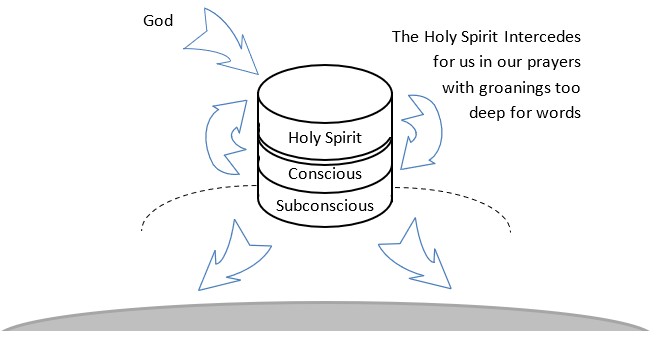
▪︎ Holy Spirit’s Intervention in our prayers – Rom 8:26;
▪︎ Transformed in stages to the likeness of Christ – 2Cor 3:18;
▪︎ God granted repentance – 2Tim 2:24-25;
Discussion Questions
1. Consider and meditate on Paul’s use of the word prayer in Col 1:9 (note the verb tense and voice)… How exactly are we to be praying?
▪︎ It is a partnership (so to speak) where we work with the Holy Spirit, expressing our heart-felt needs and supplications, and the Holy Spirit corrects those and communicates them on to the Father (Rom 8:26)… a kind of heavenly auto correct.
▪︎ Present tense = continuous actions, supplication (he is asking), with a righteous heart, we are responsible to pray, James 5:16;
▪︎ Middle voice – We are in Christ, in God (Col 1:2, 27, 29), and He is in us. We are one in the Spirit. Prayer is an intimate interplay in our shared conscious mind (Col 3:3; 1Cor 2:16) … see also … Our Motives are Known Only to God
▪︎ Prayer is also a partnership across the whole body of Christ (2Thes 3:1; Acts 2:44).
▪︎ His Spirit works with our Spirit and our conscious mind, in prayer, to convict of sin, transform us, sanctify us in the truth and call us to a ministry or task (John 14:16-17, 16:7-8).
▪︎ Every aspect of ministry needs to be driven by the Spirit and bathed in prayer, generated from the Spirit (1Peter 4:11)
2. What was the goal of Paul’s prayer?
▪︎ Complete filling of those we teach in all Spiritual wisdom, knowledge and understanding (Col 1:9).
▪︎ Promote situations worthy of the God we serve and that please and honor Him (Col 1:10).
▪︎ That they would be increasing in the knowledge of God, pure growth (Col 1:10).
▪︎ To experience all God’s Spiritual power and strength (Col 1:11).
▪︎ Attain all steadfastness and patience (Col 1:11).
▪︎ Create situations the generate thanksgiving to God (Col 1:12)
▪︎ Bring to our memory all that God has done for us in our salvation and sanctification (Col 1:13-14).
3. What are the implications of Paul using the word “walk”?
▪︎ Paul wants their prayers to effect every aspect of life
▪︎ Every step, moment by moment, in every direction.
▪︎ It is not a sprint, but more of a slug, grueling step by step, what ever it takes.
▪︎ it is not anticlimactic but walking and not fainting (Isa 40:31).
4. How does Paul shift his emphasis when he uses the word “worthy” and “please” ?
▪︎ Paul wants all efforts to go toward projects that bring honor and glory to God.
▪︎ We serve the God of the universe. It is of highest priority. Any activity directed torward His preeminence should have highest priority.
▪︎ Paul is seeking successes that result in pleasing outcomes for God.
▪︎ Some are direct, pleasing God directly like giving Him thanks, some indirectly like strengthening us for a future battle.
5. How would you prioritize the effects of prayer in last five verses? List them in order of importance.
1a. transferred to the kingdom of His beloved Son, in whom we have redemption, the forgiveness of sins.
1b. to share in the inheritance of the saints in Light
1c. to be rescued from the domain of darkness
2a. to Honor God in our walk
2b. to please Him in all respects,
3. to joyously give thanks to the Father,
4. to bear fruit in every good work,
5. to increase in knowledge of God,
6. to be strengthened w/ all power,
7. to attain all steadfastness,
8. to be patient;