
Man’s Problem
God created man in His own image (Gen 1:27). He formed man of dust from the ground and breathed into his nostrils the breath of life and man became a living being (Gen 2:7)… Simplified view:
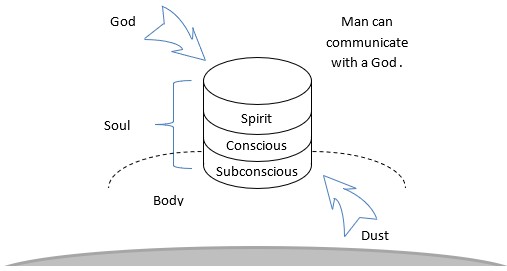
However, man decided to go his own way and disobeyed God. God told man that the consequences of this was death (Gen 2:17). Did Adam die in the Garden of Eden? Yes and no. He did not die physically, at least not immediately. However, the process of physical death did start at that point. He slowly began to die physically. And yet, man did die spiritually. The spirit that God provided to man did die at that moment and man was left without the spiritual support that God originally intended. Man remains in this state to this day. Mankind has been spiritually dead since the “fall”. Mankind will stay in this state until God intervenes again.
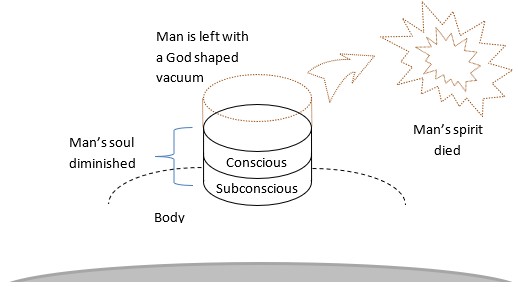
Man is now in a state where he cannot respond to God. His heart has been hardened like flint. He views God as a figment of the imagination. Worshipping God is viewed as total foolishness (1Cor 1:23-24).
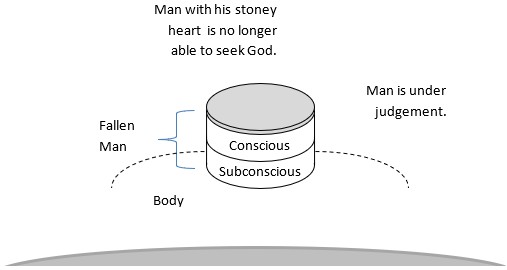
What is life like at this point? It can look like almost anything. Here are some examples:
▪︎ Hopeless – Eph 2:12;
▪︎ Alone, Isolated – Isa 59:1-2;
▪︎ Fear – Acts_2:22-24
God’s Solution
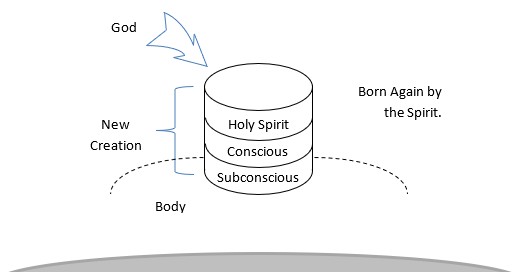
How this happened:
▪︎ Christ Himself bore our sins on the cross – 1Peter 2:24;
▪︎ This fully pays the debt of sin for those who believe – Rom 6:23;
▪︎ We are saved if we believe – John 5:24;
▪︎ God calls us to Himself – John 6:44;
▪︎ He creates in His spiritual children a new heart – 2Cor 5:17;
▪︎ God calls us to be part of His family “in” Christ – Eph 1:13-14;
▪︎ He adopts us into His Family, as His children – Eph 1:5-6;
▪︎ Jesus described this as being “born again” by the Spirit – John 3:3;
Grace
(χάρις – Greek) – charis ► noun – graciousness, especially the divine influence upon the heart, and its reflection in the life; including gratitude, — acceptable, benefit, favour, gift, grace(- ious), joy, liberality, pleasure, thankfulness – Titus 3:7; Luke 1:30-31; John 1:14; Rom 3:22-24; Eph 2:8-9;
(χαρίζομαι – Greek) – charizomai ► verb – middle voice of chairó, to grant as a favor, i.e. Gratuitously, in kindness, pardon or rescue — deliver, (frankly) forgive, (freely) give, grant, refers to God freely extending Himself (His favor, grace), reaching (inclining) to people because He is disposed to bless (be near) them. [The Holy Spirit living inside you, in full control is a prerequisite] – Rom 8:32; 1Cor 2:12; Gal 3:18; Phil 1:29; Col 3:13;
Hope
(ἐλπίς – Greek) – elpis ► noun – hope, faith, from a primary elpo (to anticipate, usually with pleasure, welcome); expectation (abstractly or concretely) or confidence – Acts 26:6; 1Tim 1:1; Rom 4:18, 8:20-21; Titus 2:13;
(ἐλπίζω – Greek) – elpizó ► verb – to hope, actively waiting for God’s fulfillment about the faith He has inbirted through the power of His love (cf. Gal 5:6 with Heb 11:1) – Matt 12:21; Rom 8:24-25; 1Cor 13:4, 7, 15:19; 2Cor 1:10; 1Tim 4:10;
Cross References
▪︎ Grace – Eph 2:8-9
▪︎ Spirit poured out – Ezek 39:29;
▪︎ Faith – Heb 11:1;
▪︎ Hope – Rom 8:24-25;
▪︎ God is reconciling the world to Himself – 2Cor 5:18-19;
▪︎ Christians are called to be ambassadors for Christ – 2Cor 5:20;
God’s Role for Christians:
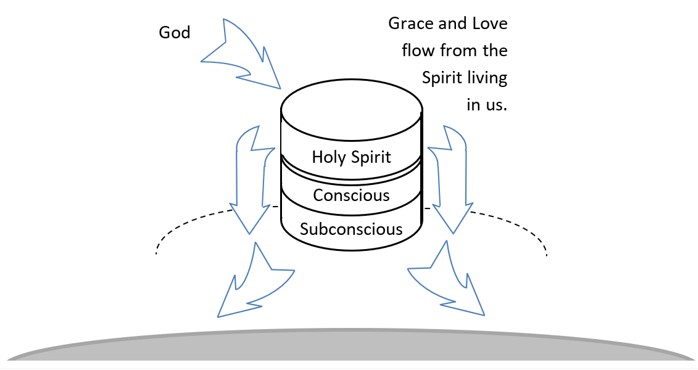
God’s view of the world:
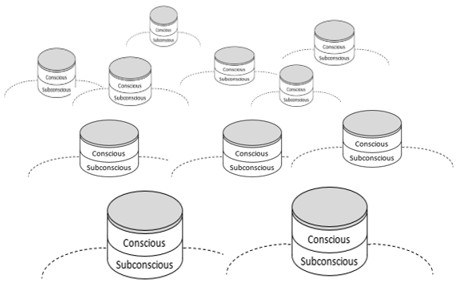
We have no way of knowing what is going on inside another person, but God knows.
Man’s view of the world:

We really do not know what is happening inside anyone else.
Detailed view of man’s heart:
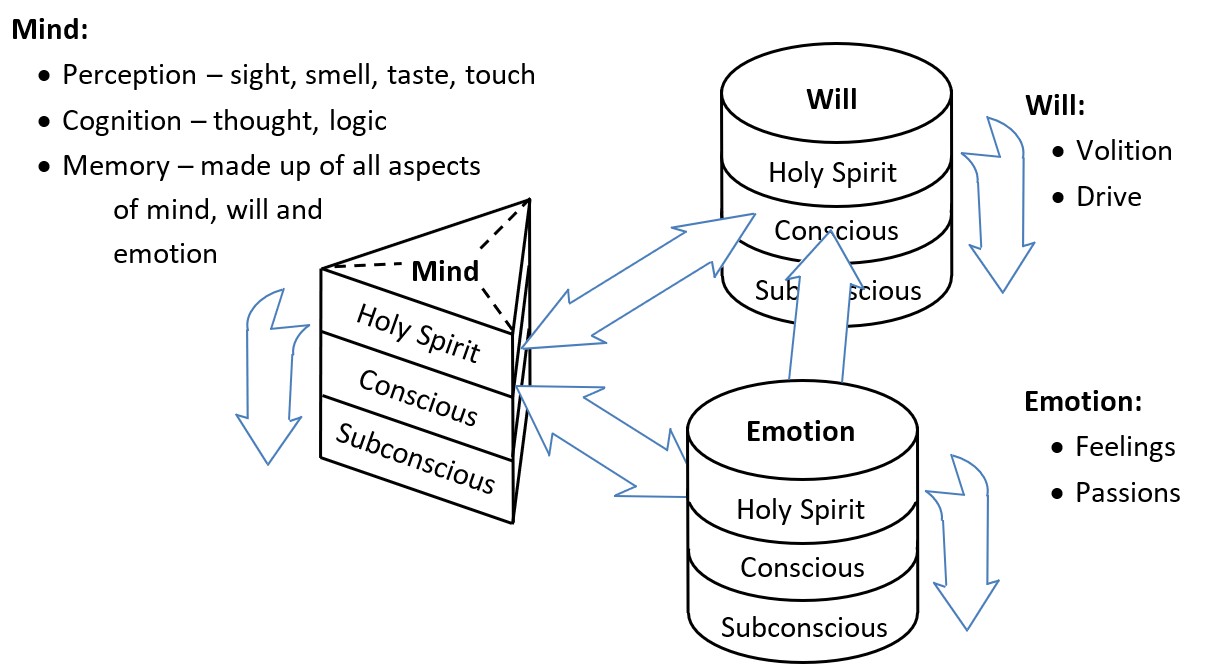
The situation gets more complex the deeper we look at man’s heart.
Discussion Questions
1. What was mankind like when he was created? How did this change?
At creation:
▪︎ Adam was made in God’s image.
▪︎ He was able to walk and talk with God.
▪︎ He shared his thoughts with God.
▪︎ God was able to give him commands and he understood those commands.
▪︎ God was complete in Himself. He just sought a relationship with someone outside the trinity to display His loving kindness and other attributes.
Sin entered:
▪︎ However, once mankind (male and female) choose to go their own way by disobeying the command of God, they died spiritually – Rom 6:23;
▪︎ This deadness was a continuing characteristic of man from that point onward. It is passed on, generation after generation, to all mankind – Rom 5:12;
2. What is man like at birth?
▪︎ We are still dead. We inherited this state from our forefathers.
▪︎ He is dead inside, spiritually dead.
▪︎ He does not have any ability to respond favorably to God – Rom 3:10-11;
▪︎ He has no hope of change in himself – Rom 5:6;
▪︎ We were without God in this world – Eph 2:12;
▪︎ We were helpless – Rom 5:6;
3. How did God solve the problem?
▪︎ God loved us and died on our behalf – John 3:16;
▪︎ God took action while we were still sinners – Rom 5:8;
▪︎ While we were enemies with Him – Rom 5:10;
▪︎ Christ died for us, the just for the unjust – 1 Peter 3:18;
▪︎ God made us alive together with Christ, if we believe – Eph 2:4-5;
4. How do you respond to friends, relatives, workmates given this situation?
▪︎ Let’s look into this in more detail.
▪︎ Can we read the Gospel of Matthew together just to see what it is all about?
▪︎ How about we study thru John every week or so, and talk about it over the phone?
5. Considering the two views of the world (God’s view and our limited view), what do you say to them on God’s behalf (note the last two cross-references above)?
▪︎ We really do not know where each person is, spiritually.
▪︎ Without a better understanding of their position and understanding, we can easily be accused of misunderstanding their state and “judging” them.
▪︎ It is best to try an approach that will get them involved in knowing God themselves more closely.
▪︎ This may involve hearing (sermons), invitation to church, reading (the Word), going through a Bible Study together. All are good approaches.
6. Colossians is a good book to study about how sanctification works. This is the process of how God makes His children into faithful representatives for Him. What questions would you would like answered in a study like that?
▪︎ This study is part of the intro to Colossians for this purpose.
▪︎ You may want to grow spiritually, yourself, to feel more comfortable in leading others in this trek.
▪︎ Any of the studies published here in the Spiritual Workbench are a good place to start (John, Titus, and Colossians). They progressively move you into a more intimate knowledge of God and Christ Jesus.
▪︎ You can go through self studies where you download and read each lesson. You can answer the questions and compare your answers to those published in the link at the start or the section entitled Discussion Questions.
▪︎ You can also go thru the lessons with a friend and share your thoughts on a weekly basis.
7. Considering the last two verses under cross references, 2Cor 5:18-19; 2Cor 5:20; What should be our goal within the church?
▪︎ God has developed a plan to reconcile the world to Himself through the attoning death on His Son Jesus Christ. He used this plan to call us to Himself in the first place (2Cor 5:19; 1John 2:2).
▪︎ He wants His children to be a part of that plan. In fact, He has assigned us that ministry (2Cor 5:18)
▪︎ He has given us His Holy Spirit to provide resources for this job – John 14:26;
▪︎ He has given us a high-level position for us to fulfill this role; He made us ambassadors (2Cor 5:20)
▪︎ We should entreat every man that we meet to be reconciled to God.
▪︎ We are not all called to be missionaries, pastors, teachers or evangelists, but we are all called to give an account of why we are the way we are, and how we became children of God (1Peter 3:15).